
Mesh vs rubber drum pads: electronic drum buying guide
Mesh vs rubber drum pads is a useful comparison when buying an electronic drum kit in Malaysia, but the surface alone does not determine the best kit. Compare playing feel, physical noise, trigger response and the whole package. This is retailer buying advice, not a claim that Soma Music has laboratory-tested these materials.
By Soma Music · Updated 13 October 2026 · Retailer buying advice
Mesh heads: check whether the tension is adjustable
Roland documents adjustable mesh-head tension on its V-Drums pads. This lets a player change the head’s feel; follow the exact pad manual rather than assuming one adjustment method suits every brand. Try gentle strokes and doubles at a comfortable setting. Do not tighten a head beyond its manufacturer’s guidance to imitate another drum.
Rubber pads: compare the actual surface, not only the label
A rubber playing surface is not a complete specification for feel, noise or triggering. Yamaha’s practice guidance distinguishes hard rubber from softer surfaces and warns that the physical strike noise of hard rubber pads can still disturb neighbours. Listen and play on the exact model instead of assuming every rubber pad feels or sounds alike.
Pad material does not tell you which module sounds you get
Roland’s TD-02K and TD-02KV comparison is a useful example: both use the TD-02 sound module, while their snare pads use rubber and mesh respectively. This shows why you should compare the sound module separately from the striking surface. These are manufacturer examples, not a statement that Soma Music stocks those models.
Check zones and compatibility separately
Ask which pads support rim sounds, which cymbals support edge or bell playing, and how those functions work with the supplied module. A mesh label alone does not promise those features. If planning an upgrade, confirm the exact pad, module input, cable and mount compatibility before buying; a replacement pad is not automatically plug-and-play.
Apartment practice: listen without headphones too
Headphones do not remove the noise of sticks hitting pads or pedals transmitting vibration through floors. Yamaha highlights both pad noise and pedal thumps in its home-practice advice. Test a normal groove with a listener nearby, and consider the kick and hi-hat pedals as well as the snare surface. No pad material guarantees an undisturbed downstairs neighbour.
Use a repeatable five-minute comparison
Use the same sticks and a comfortable playing position. These are suggested checks, not reported test results.
- With headphones off, compare normal snare strokes and pedal impacts.
- With headphones on at a similar volume, compare very soft hits and gradual accents.
- Try slow doubles and a short fill, checking whether the rebound feels controllable.
- Check the supported rim and cymbal zones on the actual kit.
- Ask about replacement heads or pads, warranty terms and the complete price.
Shortlist by budget, then confirm the exact pads
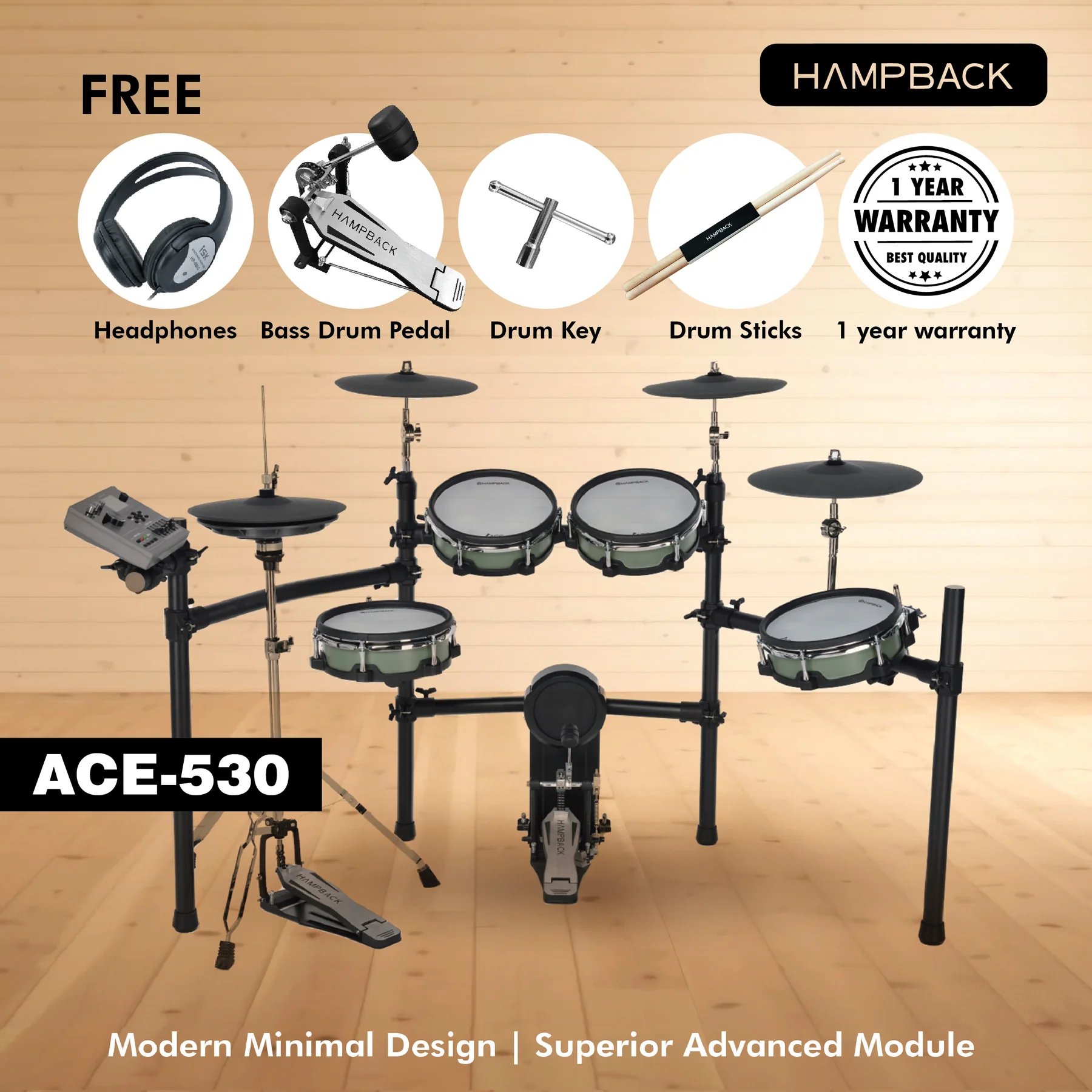
Soma Music lists Hampback MK0 Pro at RM1,320, ACE-320 at RM2,390, ACE-360 at RM3,150 and ACE-530 at RM4,100. Nimbus D-1000 at RM850 is a separate portable-format option. Do not infer their pad materials or functions from the prices: ask for the configuration and version of the kit being supplied. Confirm stock and demonstration availability before visiting our Ampang, Kuala Lumpur store.
Choose the complete electronic drum kit after comparing feel, physical noise, triggering and cost. Mesh and rubber are starting points for questions, not a reliable ranking of kit quality.